The video shows a close-up view of a large commercial airplane engine with a bright teal-colored outer casing. Debris consisting of shredded, brownish-white material is visibly caught inside the bottom lip of the engine intake. Two airport ground crew members wearing yellow safety vests with the letters CLT printed on the back are standing directly underneath the engine casing. They appear to be inspecting the damage caused by an apparent foreign object ingestion event. A third person, wearing a white uniform shirt with epaulets, walks into the frame from the left side. The jet engine’s fan blades are stationary as the personnel conduct their visual examination. The background consists of a concrete airport tarmac under bright daylight conditions. This incident seems to have occurred at Charlotte Douglas International Airport, given the CLT designation on the vests. The shredded debris lodged in the turbine looks like organic matter, possibly indicating a severe bird strike. The ground crew members are conversing while analyzing the state of the fan blades and the engine cowl. The individual in the white uniform appears to be a flight crew member or a senior technician reviewing the situation. The camera remains mostly still, focusing tightly on the lower portion of the engine intake area. There is a small label that says AI Generated in the top left corner of the video frame. The engine’s internal components appear intact, though the debris creates a shocking visual scene. The safety vests worn by the ground crew ensure they remain highly visible on the active ramp. The concrete ground below the engine shows some small dark spots or minor debris scattered around. The scale of the engine is massive compared to the people standing right next to it. The fan blades have a dark gray color with a white swirl pattern painted onto the central nose cone. The teal paint on the engine cowl is vibrant and contrasts sharply with the muted tones of the debris. The crew members seem calm but focused as they address the critical maintenance issue. The video provides a clear look at the immediate aftermath of an operational aviation hazard. The person in the white shirt looks directly at the lodged material as he approaches the engine. The overall scene highlights the strict inspection protocols required in commercial aviation safety.
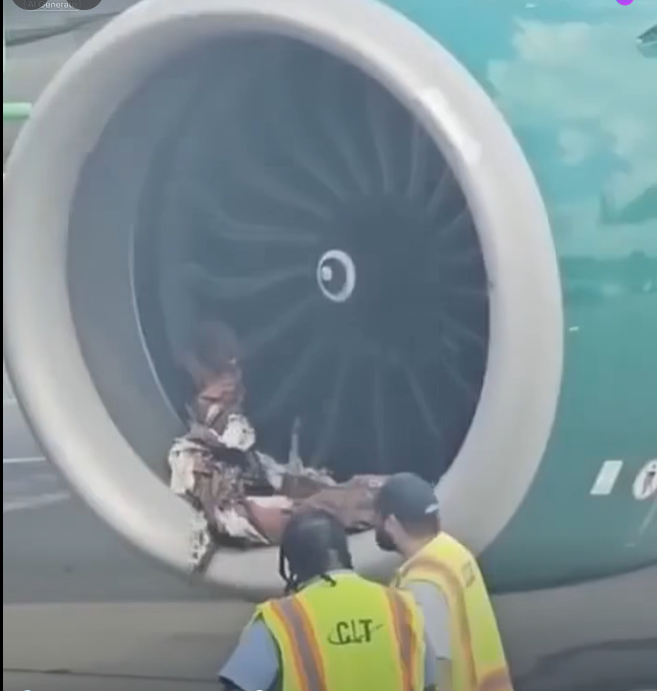
The presence of the debris indicates that this aircraft will likely be grounded for a thorough technical evaluation. The white swirl on the spinner helps ground crews easily see if the engine is spinning when active. The text on the safety vest stands out clearly in a bold, black font against the bright yellow fabric. The ground crew members maintain a safe posture while looking up into the engine intake structure. The video captures the reality of ground operations dealing with unexpected mechanical disruptions. The lighting suggests that this inspection is taking place during midday under clear skies. The texture of the shredded material looks fibrous and heavily damaged by the impact forces. The engine casing has a smooth, aerodynamic finish designed for efficient flight performance. The individual on the right side of the crew pair wears a dark baseball cap along with his safety vest. The person on the left has dark hair and looks intently at the lower edge of the cowl. The flight crew member walks slowly, observing the damage from a slightly different angle. The video serves as a stark example of the challenges posed by wildlife hazards at airports. The internal stator blades behind the main fan are partially visible in the shadows. The engine cowl shows a small white markings or numbers on the lower right side. T
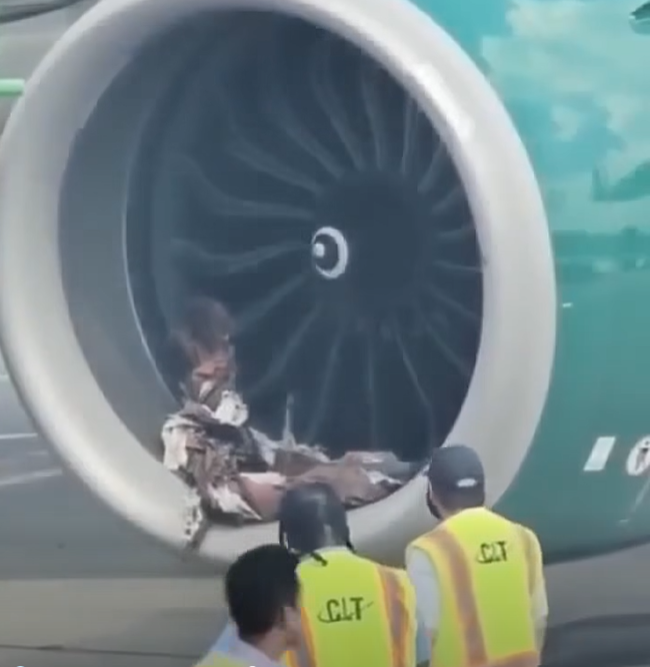
he ground workers do not touch the debris during the short duration of the video. The scene emphasizes the teamwork required between flight crews and ground support to handle emergencies. The camera angle slightly tilts as the personnel move around the engine area. The footage ends while the inspection is still actively being carried out by the team. This documentation provides a vivid perspective on the rigorous maintenance checks performed on commercial jets. The visual evidence points to a significant impact event that requires immediate engineering intervention. The presence of the AI Generated watermark suggests the video may be a simulated or generated depiction of an engine strike. The level of detail in the rendering captures the metallic sheen of the fan blades realistically. The simulation effectively conveys the serious nature of engine ingestion incidents in modern aviation. The background tarmac remains clear of heavy traffic, keeping the focus entirely on the damaged aircraft engine.