The video focuses on a disturbing image of raw ground meat sitting on a wooden surface. The primary piece of meat is packaged inside a standard white styrofoam tray typically found in grocery stores. To the left of the tray, another pile of unpackaged raw meat is visible, appearing darker red in color. Suddenly, long, pale, worm-like structures begin to emerge from the sides of the ground meat package. These fleshy, stringy organisms wriggle and squirm actively around the edges of the white tray. The movement is unsettling as the strands appear to slide out from beneath the meat. Some of the long strands curl and twist over the side of the styrofoam container. The texture of the ground meat itself is a mix of bright pink and deeper brownish-red hues. As the video progresses, the worm-like strands slowly retract back into the meat, disappearing from view. The retraction happens smoothly, making it look as though the meat is absorbing them back inside. A hand or finger briefly enters the frame on the left side, shifting the unpackaged meat slightly. The wooden surface underneath appears to be a cutting board or a rustic kitchen countertop. The lighting in the video is bright and direct, highlighting the wet and glistening texture of the raw beef. There are distinct noodle-like patterns on the surface of the ground meat from the grinding process. The strange movement of the strands creates a highly eerie and unnatural visual effect. It is unclear whether the video depicts a real biological phenomenon, parasites, or a digital visual effect. The animation of the strands moving in and out looks almost surreal and perfectly synchronized. The dark spot near the bottom center of the ground meat contrasts with the lighter pink sections on top. The white styrofoam tray remains completely still while the bizarre activity occurs around it.
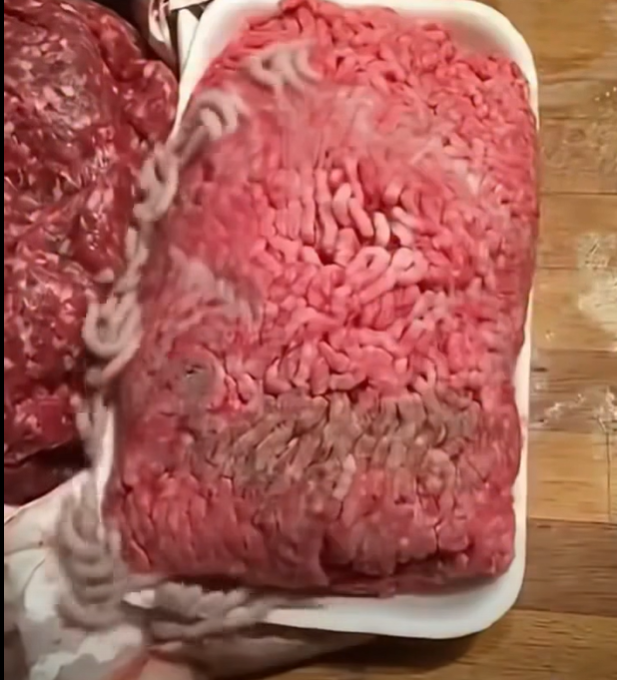
The unpackaged meat on the left has a more coarse and irregular texture compared to the tray package. The pale strands have a color that closely matches the fat content within the ground meat mixture. Their movement is fluid and elastic, stretching out before pulling back into the main mass. The video captures this unsettling event in a steady, close-up shot that emphasizes the details. No specific branding or labels are visible on the meat packaging to identify its source. The entire scene evokes a sense of revulsion due to the implication of contamination or spoilage. The strands appear to move independently, crawling along the edge of the tray before retreating. The contrast between the static meat and the dynamic strands draws the viewer’s immediate attention. The pattern on the wooden board shows grain lines running vertically alongside the tray. The hand that appears on the left is only partially visible for a fraction of a second. The video seems to be recorded from an overhead angle, looking straight down at the food item. The strands disappear completely by the middle of the clip, leaving the meat looking entirely normal. This sudden return to a normal appearance adds to the mysterious nature of the footage. The pink coloration of the meat suggests it is fresh, which makes the worm-like movement even more shocking. The video lacks any text overlays or captions explaining what is happening to the product. The edges of the meat package are slightly uneven, fitting snugly inside the rectangular tray. The background remains out of focus, keeping the viewer’s attention locked on the central subject. The video relies heavily on the shock value of seeing something alive moving inside raw food. The smooth retraction of the strands suggests a carefully timed or reverse-played visual sequence. The glistening surface of the meat reflects the overhead light source clearly.
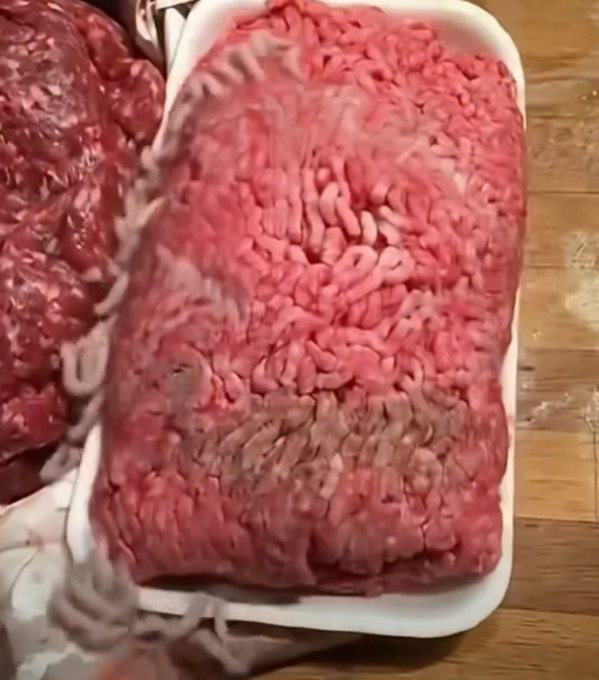
The darker red meat on the left stays completely stationary throughout the entire clip. The pale strands look remarkably like thick earthworms or large parasitic roundworms in their shape. The video creates a strong reaction from anyone watching due to common food safety fears. The composition of the image keeps the main tray perfectly centered for maximum impact. The transition from active movement to total stillness happens over just a few seconds. The natural textures of the beef grains make the overlay or effect blend in seamlessly. The video ends with the meat resting quietly on the counter as if nothing unusual had happened. The short duration of the clip leaves the viewer wondering about the authenticity of the scene. The overall visual presentation is clean but delivers a very messy and distressing concept. The movement of the strands appears to be localized mostly to the bottom and left sides of the tray. The footage successfully captures a bizarre and memorable image that challenges the viewer’s expectations of everyday objects.